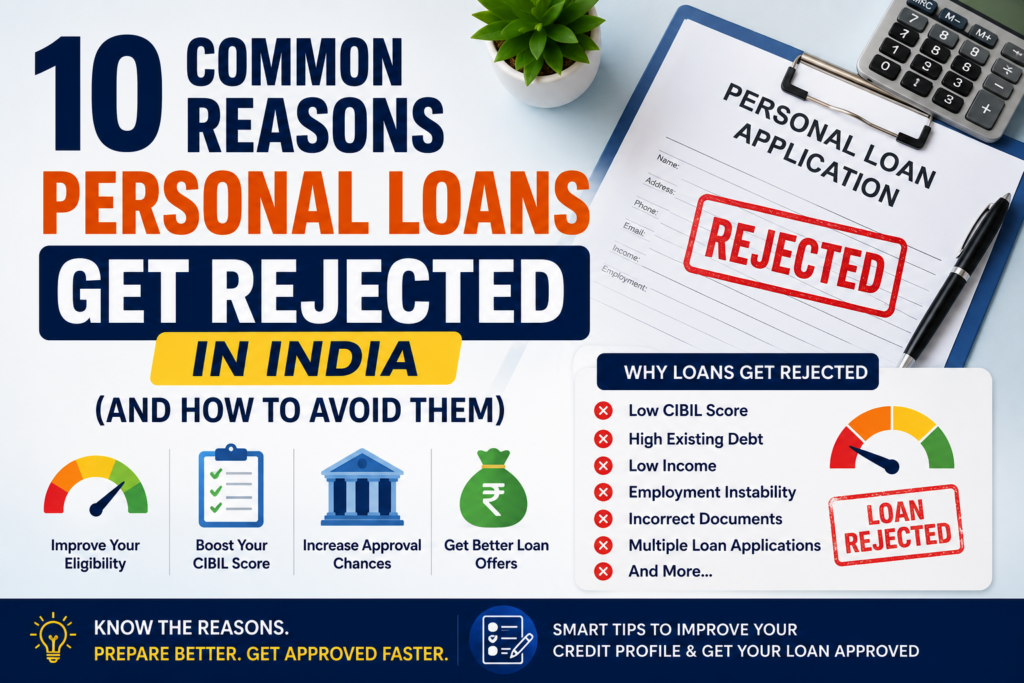
Imagine you’ve finally decided to apply for a personal loan. Maybe you need funds for a medical emergency, home renovation, wedding, education, or to consolidate existing debt. You complete the application, upload all the required documents, and wait for the bank’s response.
A few days later, you receive disappointing news—your personal loan application has been rejected.
If you’ve experienced this, you’re not alone.
Every year, thousands of personal loan applications are rejected by banks and financial institutions across India. In many cases, applicants don’t even know why their application was declined.
The good news is that most loan rejections are preventable.
Understanding why lenders reject applications can help you improve your financial profile and significantly increase your chances of approval the next time you apply.
In this guide, we’ll explore the 10 most common reasons personal loans get rejected in India and, more importantly, what you can do to avoid them.
How Do Banks Decide Whether to Approve a Personal Loan?
Unlike secured loans, personal loans don’t require collateral. Because of this, lenders carefully evaluate your ability to repay the borrowed amount before approving your application.
Some of the factors they consider include:
- Your CIBIL score
- Monthly income
- Employment stability
- Existing loan obligations
- Credit history
- Age
- Debt-to-income ratio
- Documentation
- Overall financial behaviour
If one or more of these areas raise concerns, your application may be rejected.
1. Low CIBIL Score
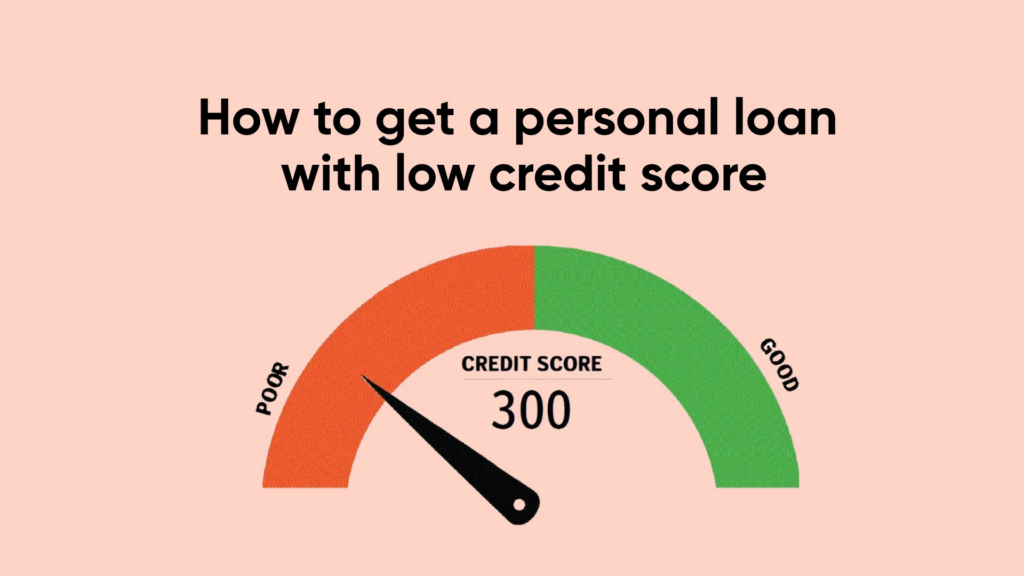
One of the most common reasons for personal loan rejection is a low CIBIL score.
Your CIBIL score reflects how responsibly you’ve managed credit in the past. It includes information about:
- Loan repayments
- Credit card payments
- Outstanding balances
- Previous defaults
- Credit enquiries
Many lenders generally prefer applicants with a CIBIL score of 750 or above, although eligibility requirements vary.
If your score is significantly lower, lenders may consider you a higher-risk borrower.
How to Avoid It
- Pay all EMIs on time.
- Never miss credit card payments.
- Keep your credit utilization below 30%.
- Regularly review your credit report for errors.
- Avoid applying for multiple loans within a short period.
Improving your credit score before applying can substantially improve your approval chances.
2. Low Monthly Income
Your income plays a major role in determining whether you can comfortably repay a personal loan.
If your monthly salary doesn’t meet the lender’s minimum income requirement, your application may be declined.
Different lenders have different eligibility criteria depending on:
- City of residence
- Employer
- Profession
- Loan amount requested
How to Avoid It
Before applying:
- Check the lender’s minimum income requirement.
- Apply for a loan amount that matches your repayment capacity.
- Consider adding a co-applicant if permitted.
Borrowing within your financial limits not only improves approval chances but also reduces repayment stress.
Also Read :- Best Credit Cards for Beginners in India
3. High Existing Debt
Even if your salary is good, lenders also evaluate how much of your income is already committed to existing EMIs.
For example:
Monthly Salary: ₹60,000
Existing EMIs:
- Car Loan: ₹15,000
- Home Loan: ₹18,000
- Credit Card EMI: ₹7,000
In this case, a significant portion of your income is already allocated to repayments.
Banks often calculate your Debt-to-Income (DTI) Ratio to determine whether you can comfortably manage another loan.
How to Avoid It
- Repay smaller loans before applying.
- Avoid taking multiple loans simultaneously.
- Reduce outstanding credit card balances.
- Improve your debt-to-income ratio before submitting a new application.
4. Unstable Employment History
Lenders generally prefer borrowers with stable employment.
Frequent job changes or very short employment durations may create concerns about future income stability.
Similarly, newly employed individuals who haven’t completed their probation period may face additional scrutiny.
How to Avoid It
- Maintain stable employment whenever possible.
- Wait until you’ve completed the minimum employment period required by the lender.
- Keep salary slips and employment documents updated.
A longer and more consistent employment record generally strengthens your application.
Also Read :- How to Get Instant Personal Loan Approval in India
5. Errors in Your Loan Application
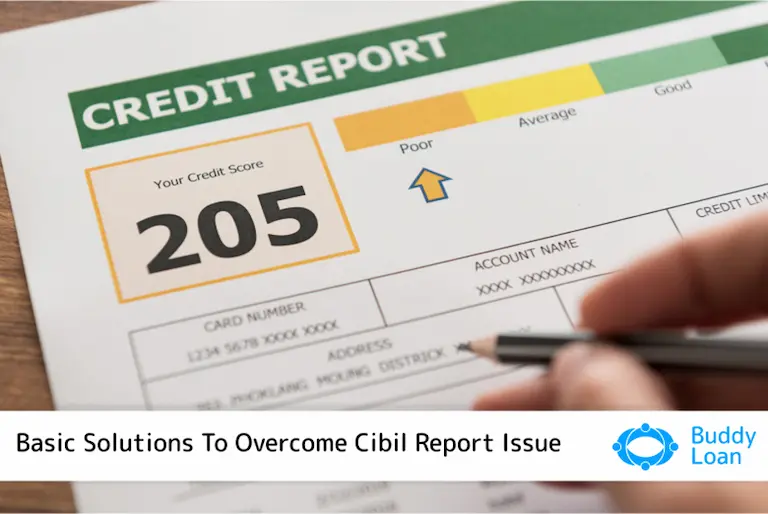
Surprisingly, many personal loan applications are rejected because of simple mistakes.
Common errors include:
- Incorrect PAN details
- Wrong Aadhaar number
- Misspelled name
- Incorrect income information
- Mismatched addresses
- Missing documents
Even small inconsistencies may delay processing or lead to rejection.
How to Avoid It
Before submitting your application:
- Double-check every field.
- Ensure all uploaded documents are clear and readable.
- Verify that your personal information matches your official documents.
- Review the application carefully before clicking “Submit.”
Taking a few extra minutes can save days of delays.
6. Applying to Multiple Lenders at the Same Time
When you’re eager to secure a personal loan, applying to several banks at once may seem like a good strategy.
However, every loan application usually results in a hard enquiry on your credit report.
Too many hard enquiries within a short period may indicate financial stress and can negatively affect your credit profile.
How to Avoid It
Instead of applying everywhere:
- Compare interest rates and eligibility first.
- Use loan eligibility calculators when available.
- Apply only to lenders where you’re likely to qualify.
Being selective improves your chances while protecting your credit score.
Why Preparation Matters
Most personal loan rejections don’t happen because applicants are irresponsible.
They happen because borrowers don’t know what lenders are looking for.
By understanding these common issues before applying, you can avoid unnecessary rejections, protect your CIBIL score, and increase your chances of receiving a favourable loan offer.
In the next section, we’ll cover additional reasons personal loans are rejected, practical ways to improve approval chances, a personal loan eligibility checklist, frequently asked questions, and expert tips for first-time borrowers.
7. Poor Repayment History
Even if your current financial situation is stable, lenders also examine your past repayment behaviour.
If you’ve previously:
- Missed EMI payments
- Paid credit card bills late
- Defaulted on a loan
- Settled a loan instead of repaying it in full
these records may negatively affect your application.
Banks view repayment history as an indicator of future behaviour. If you’ve struggled to repay credit in the past, they may be cautious about approving another loan.
How to Avoid It
- Make all future payments before the due date.
- Clear overdue balances as soon as possible.
- Avoid loan settlements unless absolutely necessary.
- Maintain a consistent repayment record over time.
Improving your repayment history won’t happen overnight, but consistent financial discipline can strengthen your profile.
8. Incomplete or Incorrect Documentation
Your application may also be rejected if you fail to provide the required documents or submit outdated or unclear copies.
Commonly required documents include:
- PAN Card
- Aadhaar Card
- Address Proof
- Salary Slips
- Bank Statements
- Income Tax Returns (for self-employed applicants)
- Passport-sized Photograph
If any document is missing or doesn’t match the information in your application, the lender may reject or delay the application.
How to Avoid It
Before applying:
- Keep digital copies of all documents ready.
- Ensure your documents are valid and updated.
- Check that your name, address, and date of birth match across all documents.
- Upload clear, readable scans.
9. Not Meeting the Lender’s Eligibility Criteria
Every bank and financial institution has its own eligibility requirements.
These may include:
- Minimum age
- Maximum age
- Employment type
- Minimum monthly income
- Work experience
- City of residence
- Credit score requirement
Even if another lender approves similar applicants, one bank may reject your application because you don’t meet its specific criteria.
How to Avoid It
Before applying:
- Visit the lender’s website.
- Review the eligibility conditions.
- Use their loan eligibility calculator if available.
- Apply only if you meet the basic requirements.
This simple step can help you avoid unnecessary hard enquiries on your credit report.
10. Requesting an Unrealistic Loan Amount
Many applicants request a loan amount based on what they want rather than what they can realistically repay.
For example, someone earning ₹35,000 per month may apply for a ₹25 lakh personal loan.
Even with a good credit score, lenders may consider this amount beyond the applicant’s repayment capacity.
How to Avoid It
Choose a loan amount based on:
- Your monthly income
- Existing EMIs
- Monthly expenses
- Repayment ability
Borrowing responsibly increases your chances of approval and reduces financial stress later.
How to Improve Your Chances of Personal Loan Approval
If you’re planning to apply for a personal loan soon, these practical steps can strengthen your application.
Improve Your CIBIL Score
Aim for a credit score of 750 or above by paying EMIs on time, reducing credit card balances, and avoiding unnecessary credit applications.
Maintain Stable Employment
A consistent employment history reassures lenders that you have a reliable source of income.
Reduce Existing Debt
Pay off smaller loans or outstanding credit card balances before applying for another loan.
Choose the Right Loan Amount
Borrow only what you genuinely need and can comfortably repay.
Verify Your Documents
Double-check all personal information and ensure your documents are complete and accurate.
Compare Lenders
Different lenders have different eligibility criteria and interest rates. Compare your options before submitting an application.
Personal Loan Eligibility Checklist
Before applying, ask yourself these questions:
✅ Is my CIBIL score above 750 (or close to it)?
✅ Have I paid all EMIs and credit card bills on time?
✅ Is my debt-to-income ratio manageable?
✅ Have I been employed consistently?
✅ Are all my documents ready?
✅ Am I applying for a realistic loan amount?
✅ Have I avoided multiple recent loan applications?
If you answered “Yes” to most of these questions, your application is likely to be stronger.
Frequently Asked Questions
What is the minimum CIBIL score required for a personal loan?
Different lenders have different requirements. However, many banks generally prefer applicants with a CIBIL score of 750 or higher for smoother approvals and better loan terms.
Can a personal loan be approved with a low CIBIL score?
Yes, it’s possible in some cases. However, you may receive a lower loan amount, higher interest rate, or additional eligibility conditions.
Does applying for multiple personal loans affect my CIBIL score?
Yes.
Multiple hard enquiries within a short period may temporarily reduce your credit score and can make lenders more cautious.
Can incorrect information lead to loan rejection?
Absolutely.
Simple mistakes such as incorrect PAN details, mismatched addresses, or missing documents can delay or even result in rejection.
How long should I wait before applying again after rejection?
Instead of applying immediately, first identify why your application was rejected. Improve the relevant areas—such as your credit score, documentation, or debt level—before reapplying.
Final Thoughts
A personal loan rejection can be disappointing, but it doesn’t have to be the end of the road.
In many cases, the reasons behind a rejection are manageable. Whether it’s improving your CIBIL score, reducing existing debt, correcting application errors, or applying for a more realistic loan amount, small changes can make a significant difference.
Before submitting your next application, take the time to understand your financial profile and prepare carefully. A stronger application not only improves your chances of approval but may also help you secure better interest rates and loan terms.
Key Takeaways
- A low CIBIL score is one of the most common reasons for rejection.
- High existing debt can reduce your loan eligibility.
- Stable employment strengthens your application.
- Accurate documentation is essential.
- Avoid applying to multiple lenders at the same time.
- Choose a loan amount that matches your repayment capacity.
- Review the lender’s eligibility criteria before applying.