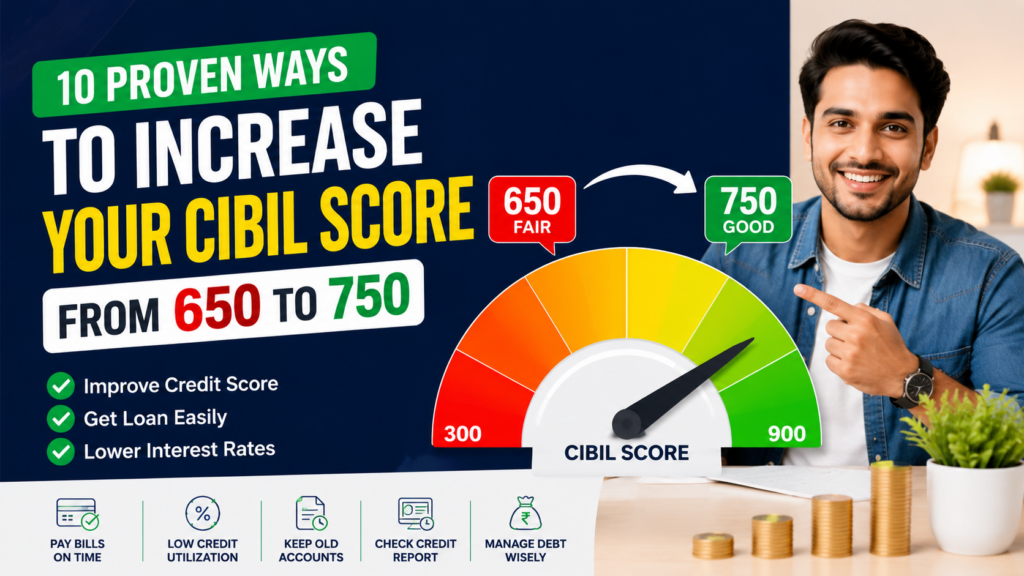
A CIBIL score is one of the first things banks and financial institutions check before approving a loan or credit card. If your score is around 650, you may still qualify for credit, but you could face higher interest rates, lower credit limits, or even loan rejections.
The good news is that improving your CIBIL score isn’t complicated. With the right financial habits and a little patience, moving from 650 to 750 is an achievable goal for many borrowers.
In this guide, you’ll learn 10 practical ways to improve your CIBIL score, avoid common mistakes, and strengthen your financial profile.
Table of Contents
- What is a CIBIL Score?
- Why Is 750 Considered a Good Score?
- 10 Proven Ways to Increase Your CIBIL Score
- Common Mistakes That Lower Your Score
- Frequently Asked Questions
- Final Thoughts
What Is a CIBIL Score?
A CIBIL score is a three-digit number ranging from 300 to 900 that reflects your creditworthiness based on your borrowing and repayment history.
Generally:
| CIBIL Score | Meaning |
|---|---|
| 300–549 | Poor |
| 550–649 | Fair |
| 650–749 | Good but can be improved |
| 750–900 | Excellent |
A score above 750 often improves your chances of loan approval and may help you secure better interest rates.
Why Should You Aim for a 750+ CIBIL Score?
A higher CIBIL score can provide several benefits:
- Faster loan approvals
- Better chances of getting a home or personal loan
- Lower interest rates
- Higher credit card limits
- Easier approval for premium credit cards
- Greater confidence from lenders
Improving your score today can save you money over the life of a loan.
1. Pay Every EMI and Credit Card Bill on Time
Payment history is one of the most important factors influencing your CIBIL score.
Even a single missed payment can negatively affect your credit profile and remain on your credit report for years.
Best Practices
- Set up automatic payments.
- Enable payment reminders.
- Always pay at least the minimum amount due, though paying the full balance is preferable.
- Avoid delaying EMIs by even a few days.
Pro Tip: Consistent on-time payments over several months can significantly improve your score.
2. Keep Your Credit Utilization Below 30%
Credit utilization refers to the percentage of your available credit limit that you’re using.
For example:
- Credit Limit: ₹1,00,000
- Outstanding Balance: ₹25,000
Your utilization ratio is 25%, which is considered healthy.
Using a large portion of your available credit can indicate financial stress to lenders.
Ideal Utilization
- Below 30%: Excellent
- 30%–50%: Acceptable
- Above 50%: Risky
Reducing your outstanding balance before the billing cycle ends can help improve this ratio.
3. Check Your CIBIL Report Regularly
Many people only review their credit report when applying for a loan.
However, errors such as incorrect loan statuses, duplicate accounts, or inaccurate late payment records can lower your score unfairly.
Review your report periodically to:
- Verify personal details.
- Check active loans.
- Confirm repayment history.
- Identify reporting errors.
- Raise disputes promptly if necessary.
Monitoring your report also helps detect potential fraud.
4. Avoid Applying for Multiple Loans at the Same Time
Each loan or credit card application triggers a hard inquiry by the lender.
Submitting several applications within a short period may suggest you’re heavily dependent on credit, which can temporarily reduce your CIBIL score.
Instead:
- Compare lenders before applying.
- Apply only when necessary.
- Space out applications over time.
Being selective demonstrates responsible borrowing behavior.
5. Maintain Older Credit Accounts
The length of your credit history also plays an important role.
Older credit accounts show lenders that you’ve managed credit responsibly over a longer period.
If you have an old credit card with no annual fee and a good repayment history, keeping it active can strengthen your overall credit profile.
Avoid closing your oldest accounts unless there’s a compelling reason.
Key Takeaways So Far
Improving your CIBIL score begins with disciplined financial habits:
- Never miss EMI or credit card payments.
- Keep credit utilization below 30%.
- Monitor your credit report for errors.
- Limit unnecessary loan applications.
- Maintain a longer credit history whenever possible.
These five strategies alone can lay a strong foundation for moving your score from 650 toward 750 over time. step toward improvement.
6. Maintain a Healthy Mix of Credit
Lenders prefer borrowers who can manage different types of credit responsibly. Having only one type of credit isn’t necessarily bad, but a balanced mix can strengthen your credit profile over time.
There are two main types of credit:
- Secured Credit: Home loans, car loans, gold loans, loans against property.
- Unsecured Credit: Personal loans and credit cards.
A healthy combination of secured and unsecured credit shows lenders that you can handle different financial responsibilities. However, don’t take a loan just to improve your CIBIL score. Only borrow when there’s a genuine need.
7. Don’t Close Your Credit Card Immediately After Repayment
Many people think closing a credit card after paying off the balance is a smart move. In reality, it can sometimes reduce your CIBIL score.
Closing a long-standing credit card may:
- Reduce your total available credit.
- Increase your credit utilization ratio.
- Shorten your average credit history.
If the card has no annual fee and you can manage it responsibly, keeping it open is often beneficial. Use it occasionally for small purchases and pay the bill in full every month.
8. Clear Outstanding Dues and Settled Accounts
If you’ve previously settled a loan instead of fully repaying it, lenders may view this negatively.
There’s a significant difference between:
- Closed Account: Loan fully repaid.
- Settled Account: Loan settled for less than the outstanding amount.
Whenever possible:
- Pay pending dues completely.
- Convert settled accounts into closed accounts if the lender allows.
- Obtain a No Due Certificate after repayment.
Fully repaid loans demonstrate responsible financial behavior and can positively impact your credit profile over time.
9. Become an Authorized User on a Responsible Credit Card
If a family member has an excellent repayment history and consistently manages their credit card well, becoming an authorized user (where supported by the card issuer) may help you begin building a positive credit history.
Before considering this option:
- Ensure the primary cardholder has an excellent repayment record.
- Verify how the issuer reports authorized users to credit bureaus.
- Continue maintaining your own responsible credit habits.
Remember, your own payment history remains the most important factor in building a strong CIBIL score.
10. Be Patient and Stay Consistent
Many people expect their CIBIL score to increase within a few days.
In reality, credit score improvement takes time.
Depending on your credit history, noticeable improvements may take anywhere from three to twelve months.
Consistency matters more than quick fixes.
Focus on:
- Paying every EMI on time.
- Paying credit card bills in full whenever possible.
- Keeping credit utilization below 30%.
- Avoiding unnecessary loan applications.
- Monitoring your credit report regularly.
Good financial habits, maintained over time, are what lead to a stronger credit score.
Common Mistakes That Can Reduce Your CIBIL Score
Avoid these common mistakes:
- Missing EMI payments.
- Paying only after the due date.
- Maxing out your credit card limit.
- Applying for multiple loans simultaneously.
- Ignoring errors in your credit report.
- Defaulting on loans.
- Frequently closing old credit cards.
- Taking more debt than you can comfortably manage.
Even small mistakes can affect your credit profile if repeated over time.
How Long Does It Take to Increase a CIBIL Score?
The timeline varies depending on your financial history.
| Situation | Approximate Time |
|---|---|
| Correcting report errors | 30–60 days |
| Improving payment history | 3–6 months |
| Recovering from missed payments | 6–12 months |
| Building a new credit history | 6–12 months |
Patience and disciplined financial management are key.
Frequently Asked Questions
Can I increase my CIBIL score in 30 days?
Minor improvements are possible if you reduce outstanding credit card balances or correct reporting errors. However, moving from 650 to 750 usually requires several months of consistent financial discipline.
Is 650 a bad CIBIL score?
A score of 650 is generally considered fair. While some lenders may approve loans, borrowers with higher scores often receive better interest rates and loan terms.
Does checking my own CIBIL score reduce it?
No. Checking your own credit report is considered a soft inquiry and does not affect your CIBIL score.
What is the ideal credit utilization ratio?
Keeping your credit utilization below 30% is generally recommended. Lower utilization often reflects positively on your credit profile.
How often is the CIBIL score updated?
Lenders typically report credit information every month. Once updated, changes in your repayment behavior may gradually be reflected in your CIBIL score.
Final Thoughts
Improving your CIBIL score from 650 to 750 is achievable with consistent financial discipline. There is no shortcut or guaranteed overnight solution.
By paying bills on time, maintaining low credit utilization, avoiding unnecessary loan applications, monitoring your credit report, and managing your credit responsibly, you can steadily build a stronger credit profile.
Remember that a higher CIBIL score is more than just a number—it can improve your chances of loan approval, help you secure lower interest rates, and strengthen your overall financial health.
Start implementing these habits today, and over time you’ll be well on your way to achieving an excellent credit score.
Quick Summary
✔ Pay all EMIs and credit card bills on time.
✔ Keep credit utilization below 30%.
✔ Review your CIBIL report regularly.
✔ Avoid multiple loan applications in a short period.
✔ Maintain older credit accounts.
✔ Keep a balanced mix of secured and unsecured credit.
✔ Clear outstanding dues completely.
✔ Avoid settling loans whenever possible.
✔ Build a long-term history of responsible borrowing.
✔ Stay patient and consistent.
A strong CIBIL score is built through good financial habits—not quick fixes.