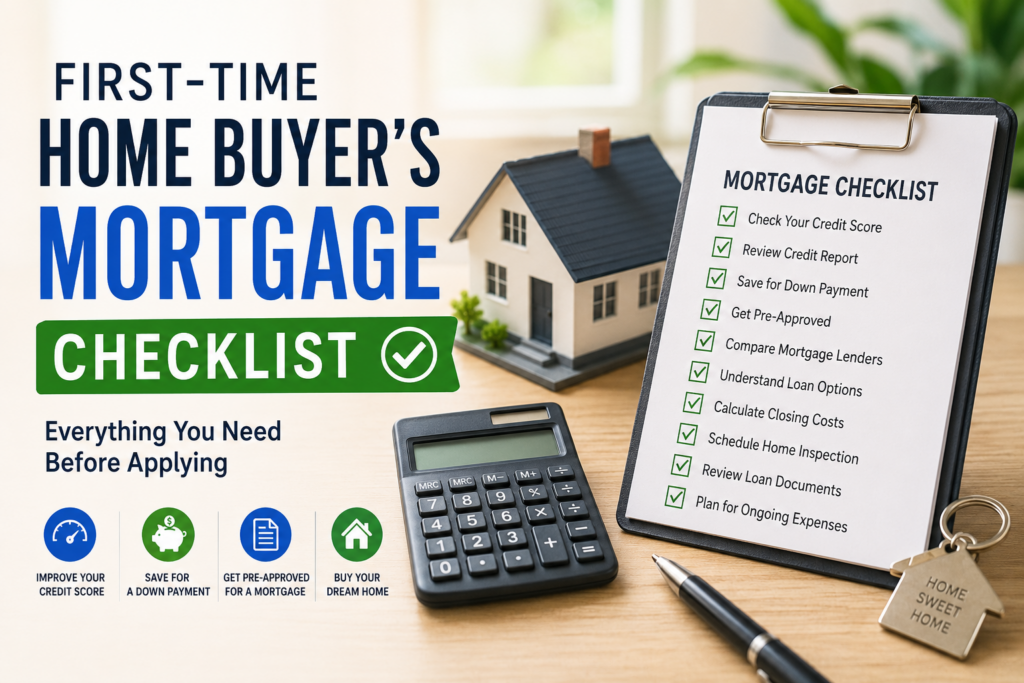
Buying your first home is one of the biggest financial decisions you’ll ever make. While it can be exciting to imagine receiving the keys to your dream house, the mortgage process often feels overwhelming—especially for first-time buyers.
Many buyers begin searching for homes before understanding what lenders expect. As a result, they may face loan delays, higher interest rates, or even mortgage rejection.
The good news is that proper preparation can significantly improve your chances of getting approved while helping you secure better loan terms.
This comprehensive First-Time Home Buyer’s Mortgage Checklist covers every step you should complete before applying for a mortgage, from improving your credit score to organizing paperwork and understanding closing costs.
Whether you’re planning to buy a home this year or preparing months in advance, this guide will help you approach the mortgage process with confidence.
Why a Mortgage Checklist Matters
Purchasing a home isn’t just about qualifying for a loan.
Lenders evaluate your overall financial health to determine whether you’re capable of repaying the mortgage over many years.
A well-prepared buyer usually experiences:
- Faster mortgage approval
- Better interest rates
- Lower monthly payments
- Reduced financial stress
- Fewer surprises during closing
Preparing early also gives you enough time to fix issues that could otherwise delay your purchase.
1. Know Your Budget Before House Hunting
One of the biggest mistakes first-time buyers make is shopping for homes before determining what they can realistically afford.
Remember:
Just because a lender approves you for a certain amount doesn’t necessarily mean you should borrow the maximum.
Instead, calculate your comfortable monthly housing budget by considering:
- Mortgage payment
- Property taxes
- Homeowners insurance
- HOA fees (if applicable)
- Maintenance costs
- Utilities
- Emergency savings
A mortgage should fit comfortably within your overall financial plan.
Also Read :- Fixed vs Floating Home Loan Interest Rates
2. Check Your Credit Score
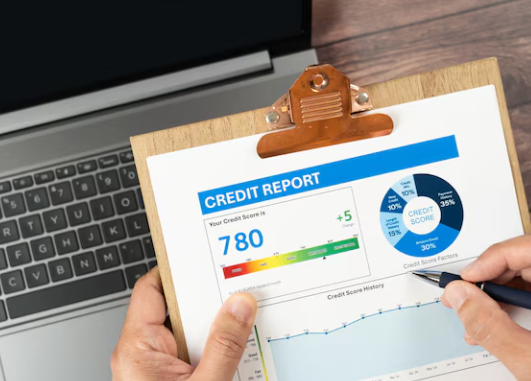
Your credit score is one of the most important factors affecting your mortgage approval.
A higher score often means:
- Lower interest rates
- Better loan options
- Reduced monthly payments
- Easier approval
Before applying:
- Review your credit report
- Check for errors
- Pay all bills on time
- Reduce outstanding debt
- Avoid opening unnecessary credit accounts
Even a modest improvement in your credit score can save thousands of dollars over the life of your mortgage.
3. Review Your Credit Report Carefully
Many people don’t realize their credit report contains mistakes until they apply for a mortgage.
Common issues include:
- Incorrect balances
- Duplicate accounts
- Fraudulent activity
- Wrong payment history
- Accounts that don’t belong to you
Correcting these errors before applying can improve your mortgage eligibility.
4. Save for Your Down Payment
The down payment is one of the largest upfront expenses when buying a home.
Although some mortgage programs allow lower down payments, contributing more upfront usually provides several benefits:
- Lower monthly mortgage payments
- Reduced loan amount
- Better interest rates
- Less interest paid over time
- Greater home equity from day one
Create a dedicated savings account specifically for your home purchase.
5. Build an Emergency Fund
Many buyers spend every dollar on their down payment.
Unfortunately, unexpected expenses often appear shortly after moving in.
Examples include:
- Roof repairs
- Plumbing problems
- HVAC replacement
- Appliance repairs
- Moving expenses
Experts generally recommend maintaining several months of living expenses after purchasing a home.
6. Calculate Additional Home Buying Costs
Your down payment isn’t your only expense.
You’ll also encounter costs such as:
- Closing costs
- Home inspection
- Property appraisal
- Title insurance
- Recording fees
- Moving expenses
- Utility setup
- Furniture
- Repairs
- Landscaping
Planning for these costs prevents financial surprises.
7. Organize Your Financial Documents
Mortgage lenders require detailed documentation.
Prepare these documents in advance:
Identification
- Government-issued ID
- Social Security Number
Income Verification
- Recent pay stubs
- W-2 forms
- Tax returns
- Employment verification
Bank Statements
Typically covering several recent months.
Investment Accounts
If applicable:
- Retirement accounts
- Stocks
- Mutual funds
Asset Documentation
Including:
- Savings
- Certificates of Deposit (CDs)
- Gift funds (if permitted)
Having these documents ready speeds up underwriting.
8. Maintain Stable Employment
Lenders generally prefer borrowers with consistent employment history.
Avoid:
- Frequently changing jobs
- Large employment gaps
- Quitting before closing
If a job change is unavoidable, ensure you can explain the transition clearly.
9. Reduce Existing Debt
Your debt affects your mortgage approval through your Debt-to-Income (DTI) ratio.
Pay down:
- Credit cards
- Personal loans
- Auto loans
- Other revolving debt
A lower DTI demonstrates stronger financial stability.
10. Avoid Major Financial Changes
Once you begin the mortgage process, avoid:
- Financing a new car
- Opening new credit cards
- Taking personal loans
- Missing payments
- Making unusually large purchases
Lenders may review your financial activity again before closing.
11. Get Pre-Approved for a Mortgage
Mortgage pre-approval offers several advantages.
It helps you:
- Understand your buying power
- Shop confidently
- Strengthen purchase offers
- Identify potential issues early
A pre-approval letter also signals to sellers that you’re a serious buyer.
12. Compare Multiple Mortgage Lenders
Never accept the first mortgage offer without comparison.
Different lenders may provide:
- Different interest rates
- Lower fees
- Flexible loan options
- Better customer service
- Faster processing
Even a small difference in interest rates can significantly impact long-term costs.
13. Understand Mortgage Types
Not every mortgage is suitable for every buyer.
Common options include:
Conventional Loans
Ideal for borrowers with strong credit and stable income.
FHA Loans
Designed for buyers with lower down payments or limited credit history.
VA Loans
Available for eligible veterans, active-duty service members, and qualifying military families.
USDA Loans
Intended for eligible rural property purchases.
Research which loan aligns best with your financial situation.
14. Choose Between Fixed and Adjustable Interest Rates
Understanding interest rate options is essential.
Fixed-Rate Mortgage
- Stable monthly payments
- Predictable budgeting
- Protection against rising interest rates
Also Read :- How to Improve Your Credit Score in the US
Adjustable-Rate Mortgage (ARM)
- Lower initial interest rate
- Rate may increase later
- Suitable for certain buyers planning shorter ownership periods
Evaluate your long-term plans before deciding.
15. Understand Closing Costs
Closing costs often range from a percentage of the home’s purchase price and may include:
- Loan origination fees
- Appraisal
- Title services
- Attorney fees (where applicable)
- Recording fees
- Escrow deposits
- Homeowners insurance premiums
Request a Loan Estimate from lenders so you understand these costs before closing.
16. Schedule a Home Inspection
A mortgage approval doesn’t guarantee the home’s condition.
A professional inspection may reveal:
- Structural damage
- Roof issues
- Electrical problems
- Plumbing defects
- Mold
- Foundation concerns
A home inspection can save thousands in unexpected repairs.
17. Get the Home Appraised
Lenders typically require an appraisal to confirm the property’s market value.
If the appraisal comes in below the purchase price, you may need to:
- Renegotiate with the seller
- Increase your down payment
- Reconsider the purchase
Understanding this step helps you prepare for possible outcomes.
18. Budget for Ongoing Homeownership Costs
Owning a home involves recurring expenses beyond the mortgage.
These include:
- Property taxes
- Homeowners insurance
- Routine maintenance
- Lawn care
- Repairs
- Utilities
- HOA dues
Create a realistic long-term budget to manage these costs comfortably.
19. Read Every Loan Document Carefully
Never sign paperwork without understanding it.
Review:
- Interest rate
- Monthly payment
- Closing costs
- Loan term
- Prepayment penalties (if any)
- Escrow details
Ask questions whenever something isn’t clear.
20. Plan for the Long Term
Buying your first home isn’t just about moving in—it’s about building long-term financial stability.
Think about:
- Future income
- Career growth
- Family plans
- Emergency savings
- Home maintenance
- Refinancing opportunities
A sustainable mortgage should support your future goals, not limit them.
Common Mistakes First-Time Home Buyers Should Avoid
Many buyers make avoidable mistakes that create delays or increase costs.
Watch out for these common errors:
- Shopping before getting pre-approved
- Ignoring your credit score
- Draining your savings for the down payment
- Forgetting about closing costs
- Taking on new debt during the mortgage process
- Skipping the home inspection
- Choosing a mortgage based only on the lowest interest rate
- Not comparing multiple lenders
- Underestimating ongoing homeownership expenses
- Signing documents without reviewing them
Avoiding these mistakes can make your home-buying journey smoother and less stressful.
Quick Mortgage Checklist
Before applying, confirm that you’ve completed the following:
- ✓ Checked your credit score and report
- ✓ Determined a realistic home-buying budget
- ✓ Saved your down payment
- ✓ Built an emergency fund
- ✓ Reduced unnecessary debt
- ✓ Gathered required financial documents
- ✓ Maintained stable employment
- ✓ Avoided opening new credit accounts
- ✓ Compared several mortgage lenders
- ✓ Received mortgage pre-approval
- ✓ Researched loan types
- ✓ Understood fixed vs. adjustable rates
- ✓ Planned for closing costs
- ✓ Scheduled a home inspection
- ✓ Budgeted for future homeownership expenses
- ✓ Reviewed all loan documents carefully
Frequently Asked Questions (FAQs)
How much down payment does a first-time home buyer need?
The amount depends on the mortgage program and lender requirements. Some loan programs allow lower down payments, while a larger down payment can reduce borrowing costs and monthly payments.
Is mortgage pre-approval required before buying a home?
It’s not always required, but getting pre-approved helps you understand your budget and strengthens your offer when making a purchase.
What credit score is ideal for a mortgage?
Higher credit scores generally improve your chances of approval and may qualify you for more competitive interest rates. Exact requirements vary by lender and loan type.
Can I buy a home with existing debt?
Yes, but lenders evaluate your Debt-to-Income (DTI) ratio. Lower debt levels typically improve mortgage eligibility.
Should I compare multiple mortgage lenders?
Absolutely. Comparing lenders can help you find better interest rates, lower fees, and loan terms that fit your financial goals.
Final Thoughts
Buying your first home is a major milestone, and preparing for the mortgage process can make all the difference. By following this First-Time Home Buyer’s Mortgage Checklist, you’ll be better equipped to understand your finances, gather the right documents, compare lenders, and avoid common pitfalls.
Rather than rushing into the process, take time to strengthen your financial profile, research your options, and ask questions whenever something is unclear. A well-planned approach not only improves your chances of mortgage approval but also helps you secure a home loan that supports your long-term financial well-being.
With careful preparation and informed decision-making, your first home purchase can be a rewarding investment and the beginning of a strong financial future.