Managing money can feel overwhelming.
Many people earn a decent income but still struggle to save, invest, or achieve financial stability. The problem is often not how much money they earn, but how they manage it.
One of the simplest and most effective budgeting methods is the 50/30/20 budget rule.
This rule provides a straightforward framework for dividing your income into spending, saving, and investing categories. It helps create balance between enjoying life today and preparing for the future.
Whether you’re just starting your financial journey or looking to improve your money habits, the 50/30/20 budget rule can help you take control of your finances.
What Is the 50/30/20 Budget Rule?
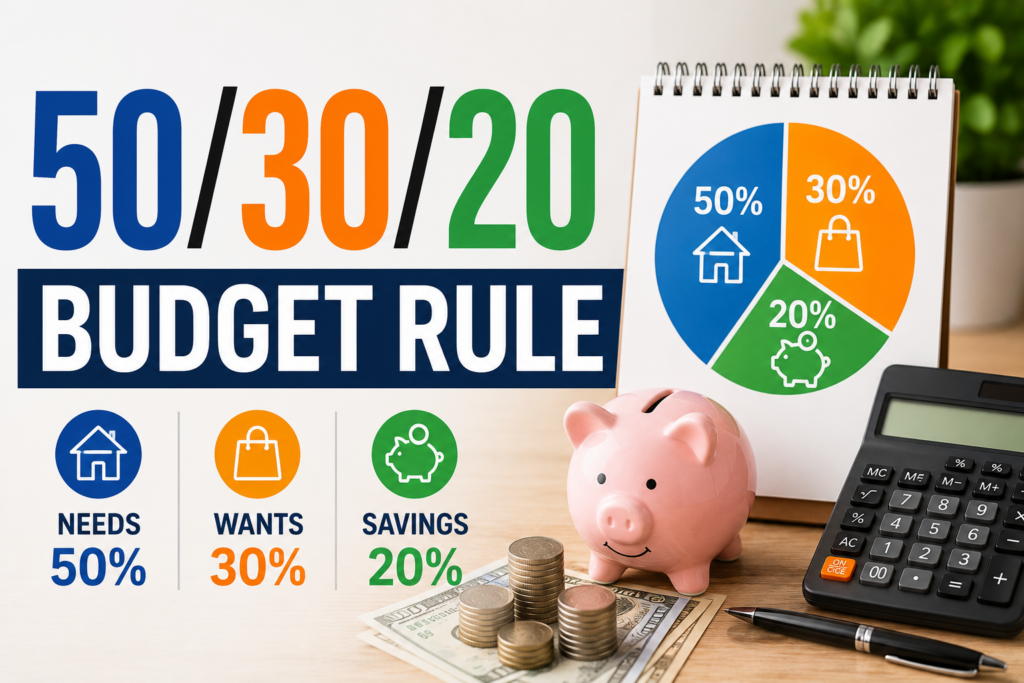
The 50/30/20 budget rule is a budgeting method that divides your after-tax income into three categories:
- 50% for Needs
- 30% for Wants
- 20% for Savings and Investments
The goal is to ensure that essential expenses are covered, lifestyle spending remains reasonable, and a portion of income is consistently directed toward financial goals.
How the 50/30/20 Budget Rule Works
Imagine your monthly take-home salary is ₹50,000.
Using the 50/30/20 rule:
50% for Needs
₹25,000
30% for Wants
₹15,000
20% for Savings and Investments
₹10,000
This simple structure creates a balanced approach to money management.
Also Read :- Why Every Indian Should Have Emergency Fund?

Understanding the 50% Needs Category
Needs are essential expenses that are necessary for daily living.
Examples include:
- Rent or home loan EMI
- Groceries
- Electricity and water bills
- Internet and mobile bills
- Insurance premiums
- Transportation costs
- Children’s school fees
- Basic healthcare expenses
These are expenses you cannot easily avoid.
Tips for Managing Needs
- Compare utility providers
- Reduce unnecessary subscriptions
- Negotiate service costs
- Avoid lifestyle inflation
The lower your needs, the more flexibility you gain in other areas.
Understanding the 30% Wants Category
Wants are non-essential expenses that improve your lifestyle.
Examples include:
- Dining out
- Entertainment
- Shopping
- Streaming subscriptions
- Vacations
- Gaming
- New gadgets
- Hobbies
Many people confuse wants with needs.
A smartphone may be a need.
Buying the latest premium smartphone every year is a want.
Why Wants Matter
Budgeting should not feel like punishment.
Allowing room for enjoyment helps maintain long-term financial discipline.
Also Read :- How to Start Investing with ₹500 Per Month in India
Understanding the 20% Savings and Investments Category
This is where long-term wealth is built.
The 20% category should include:
Emergency Fund Contributions
Money set aside for unexpected expenses.
Investments
Examples:
- SIPs
- Mutual Funds
- Stocks
- PPF
- NPS
Debt Repayment
If you have high-interest debt, part of this category can be used to repay it faster.
Retirement Planning
The earlier you start, the more powerful compounding becomes.
Example of the 50/30/20 Budget Rule
Let’s assume:
Monthly Income = ₹60,000
Needs (50%)
₹30,000
Breakdown:
- Rent = ₹12,000
- Groceries = ₹6,000
- Utilities = ₹3,000
- Transportation = ₹4,000
- Insurance = ₹2,000
- Other essentials = ₹3,000
Wants (30%)
₹18,000
Breakdown:
- Dining Out = ₹5,000
- Shopping = ₹5,000
- Entertainment = ₹3,000
- Travel Fund = ₹5,000
Savings and Investments (20%)
₹12,000
Breakdown:
- SIP = ₹7,000
- Emergency Fund = ₹3,000
- Retirement Savings = ₹2,000
This structure provides both financial stability and flexibility.
Benefits of the 50/30/20 Budget Rule
Easy to Understand
Unlike complicated budgeting systems, this rule is simple and practical.
Encourages Saving
Many people save whatever is left after spending.
This method prioritizes saving from the beginning.
Reduces Financial Stress
Having clear spending limits helps avoid overspending.
Supports Long-Term Wealth Creation
Consistent saving and investing can significantly improve financial security over time.
Works for Most Income Levels
Whether you earn ₹20,000 or ₹2 lakh per month, the framework remains useful.
Common Budgeting Mistakes
Not Tracking Expenses
Many people underestimate how much they spend.
Track your expenses regularly.
Ignoring Savings
Saving should never be an afterthought.
Treat it like a fixed expense.
Overspending on Wants
Small lifestyle upgrades can quickly consume your income.
Not Reviewing Your Budget
Your budget should evolve with your life circumstances.
Also Read :- Best SIP Investment Plans for Beginners in India
Can the 50/30/20 Rule Be Modified?
Absolutely.
Personal finance is personal.
Some situations may require adjustments.
Example 1: High Cost of Living
You may need:
- 60% Needs
- 20% Wants
- 20% Savings
Example 2: Aggressive Wealth Building
You may choose:
- 50% Needs
- 20% Wants
- 30% Savings
Example 3: Debt Repayment Phase
You may temporarily allocate:
- 50% Needs
- 15% Wants
- 35% Debt Repayment and Savings
The principle remains the same:
Spend intentionally and save consistently.
Tips to Make the 50/30/20 Rule Successful
Automate Savings
Transfer money to savings and investments immediately after receiving income.
Use Budgeting Apps
Apps can simplify tracking and categorization.
Review Monthly
Assess:
- Spending habits
- Savings progress
- Investment contributions
Increase Savings When Income Rises
Avoid increasing lifestyle spending every time you get a raise.
Who Should Use the 50/30/20 Budget Rule?
This budgeting method works especially well for:
- Young professionals
- First-time earners
- Families
- Freelancers
- People struggling to save
- Anyone seeking financial discipline
It provides a strong foundation for financial success.
Frequently Asked Questions
Is the 50/30/20 Budget Rule Good for Beginners?
Yes. It is one of the easiest budgeting methods to understand and implement.
Should Savings Include Investments?
Yes. The 20% category can include both savings and investments.
What If My Expenses Are Too High?
Focus on reducing non-essential spending and gradually improving your budget.
Can Students Use This Rule?
Yes. Even with a limited income, the framework can help develop good financial habits.
Does the Rule Guarantee Wealth?
No budgeting method guarantees wealth, but it creates habits that support long-term financial success.
Conclusion
The 50/30/20 budget rule is a simple yet powerful way to manage money.
It helps balance current needs, lifestyle spending, and future financial goals.
By allocating 50% of income to needs, 30% to wants, and 20% to savings and investments, you can build healthier financial habits and create a more secure future.
The most important step is getting started.
Even if your percentages aren’t perfect today, following a structured budget can dramatically improve your financial life over tim