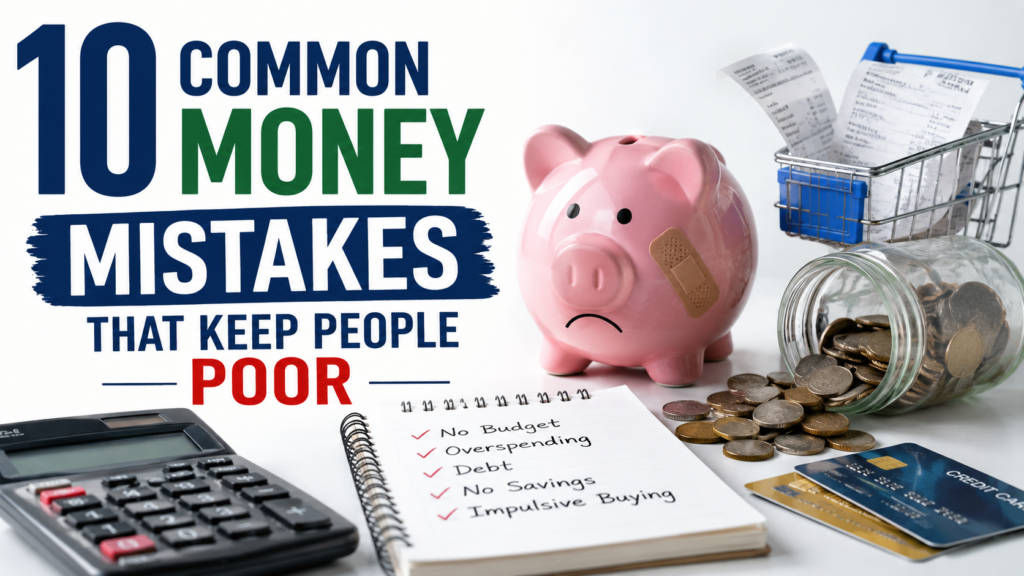
Most people don’t become wealthy because of a single big financial decision.
Similarly, most people don’t stay broke because of a single mistake.
Financial success is often determined by small habits and decisions repeated over time. Unfortunately, many people unknowingly make money mistakes that slow down their progress and prevent them from building wealth.
The good news is that these mistakes can be identified and corrected.
Let’s explore ten common money mistakes that keep people financially stuck and learn how to avoid them.
Why Small Financial Mistakes Matter
Many people underestimate the impact of daily financial decisions.
A ₹200 unnecessary expense may not seem significant today, but repeated regularly over months and years, it can become a major obstacle to saving and investing.
Financial success is rarely about earning more alone.
It is also about managing money wisely.

1. Living Beyond Your Means
One of the biggest financial mistakes is spending more than you earn.
Many people increase their lifestyle every time their income increases.
Instead of saving more, they:
- Buy expensive gadgets
- Upgrade vehicles
- Spend more on entertainment
- Increase luxury spending
This creates a cycle where income grows but wealth does not.
How to Fix It
- Track expenses regularly
- Avoid unnecessary upgrades
- Save before spending
2. Not Having a Budget
Without a budget, money often disappears without explanation.
A budget helps you understand:
- Income
- Expenses
- Savings
- Financial goals
People who budget consistently tend to have greater control over their finances.
How to Fix It
Use simple budgeting methods such as:
- 50-30-20 Rule
- Zero-Based Budgeting
- Monthly expense tracking
3. Ignoring Emergency Funds
Unexpected expenses are part of life.
Examples include:
- Medical emergencies
- Job loss
- Vehicle repairs
- Home maintenance
Without an emergency fund, people often rely on loans or credit cards.
Also Read :- 7 Money Habits of Financially Successful People
How to Fix It
Build an emergency fund covering:
- 6 months of expenses for salaried individuals
- 9–12 months of expenses for self-employed individuals
4. Misusing Credit Cards
Credit cards can be useful financial tools when used responsibly.
However, they become dangerous when used for:
- Impulse purchases
- Unnecessary spending
- Purchases beyond affordability
High-interest debt can quickly become difficult to manage.
How to Fix It
- Pay balances in full
- Avoid unnecessary purchases
- Use credit responsibly
5. Delaying Investments
Many people postpone investing because they believe they need a large amount of money to start.
This delay can be costly.
Time is one of the most important factors in wealth creation.
Why It Matters
The earlier you start investing, the longer your money has to benefit from compounding.
How to Fix It
Start small.
Even modest monthly investments can grow significantly over time.
6. Chasing Quick Money Schemes
Many people are attracted to promises of:
- Guaranteed high returns
- Instant wealth
- Risk-free profits
These schemes often lead to losses.
Building wealth usually requires patience and discipline.
How to Fix It
Focus on:
- Long-term investing
- Financial education
- Sustainable growth
If something sounds too good to be true, it probably is.
7. Taking Unnecessary Loans
Loans can be useful when used strategically.
However, borrowing for unnecessary purchases can create long-term financial stress.
Also Read :- Fixed Deposit vs SIP
Examples include:
- Luxury purchases
- Vacations on credit
- Lifestyle upgrades
How to Fix It
Borrow only when necessary and ensure repayments fit comfortably within your budget.
8. Not Tracking Expenses
Many people know their income but have little understanding of where their money goes.
Small expenses often accumulate quickly.
Examples include:
- Food delivery
- Online subscriptions
- Daily snacks
- Impulse purchases
How to Fix It
Track expenses monthly.
Awareness often leads to better spending decisions.
9. Lifestyle Inflation
Lifestyle inflation occurs when spending increases as income rises.
This prevents wealth accumulation.
Many people earn more but save the same amount they did years earlier.
How to Fix It
Whenever income increases:
- Increase savings
- Increase investments
- Maintain reasonable spending habits
10. Lack of Financial Education
Financial knowledge affects almost every money decision.
Unfortunately, many people spend years earning money without learning how to manage it effectively.
Areas Worth Learning
- Budgeting
- Investing
- Taxes
- Retirement planning
- Wealth creation
Financial education often produces returns far greater than its cost.
How to Fix These Money Mistakes
Create Clear Financial Goals
Goals provide direction and motivation.
Build Better Habits
Focus on:
- Saving regularly
- Investing consistently
- Avoiding unnecessary debt
Review Finances Monthly
Regular reviews help identify problems before they become serious.
Continue Learning
The more you understand money, the better your financial decisions become.
Benefits of Avoiding These Mistakes
Greater Financial Security
You become better prepared for unexpected situations.
Faster Wealth Creation
More money becomes available for investing.
Reduced Stress
Financial stability creates peace of mind.
Improved Financial Freedom
You gain greater control over your future.
Frequently Asked Questions
What Is the Biggest Money Mistake?
Spending more than you earn is often considered the most damaging financial mistake.
Can Small Financial Mistakes Really Matter?
Yes. Small mistakes repeated consistently can significantly impact long-term wealth.
Is It Too Late to Fix My Financial Mistakes?
No. The best time to improve financial habits is today.
Should I Save or Invest First?
Build an emergency fund first, then begin investing for long-term growth.
How Can I Improve My Financial Situation Quickly?
Focus on:
- Reducing unnecessary expenses
- Eliminating high-interest debt
- Increasing savings
- Investing consistently
Conclusion
Financial success is not about perfection.
Everyone makes mistakes.
The difference is that financially successful people identify their mistakes, learn from them, and improve their habits over time.
By avoiding these ten common money mistakes, you can strengthen your financial foundation, build wealth more effectively, and move closer to long-term financial freedom.